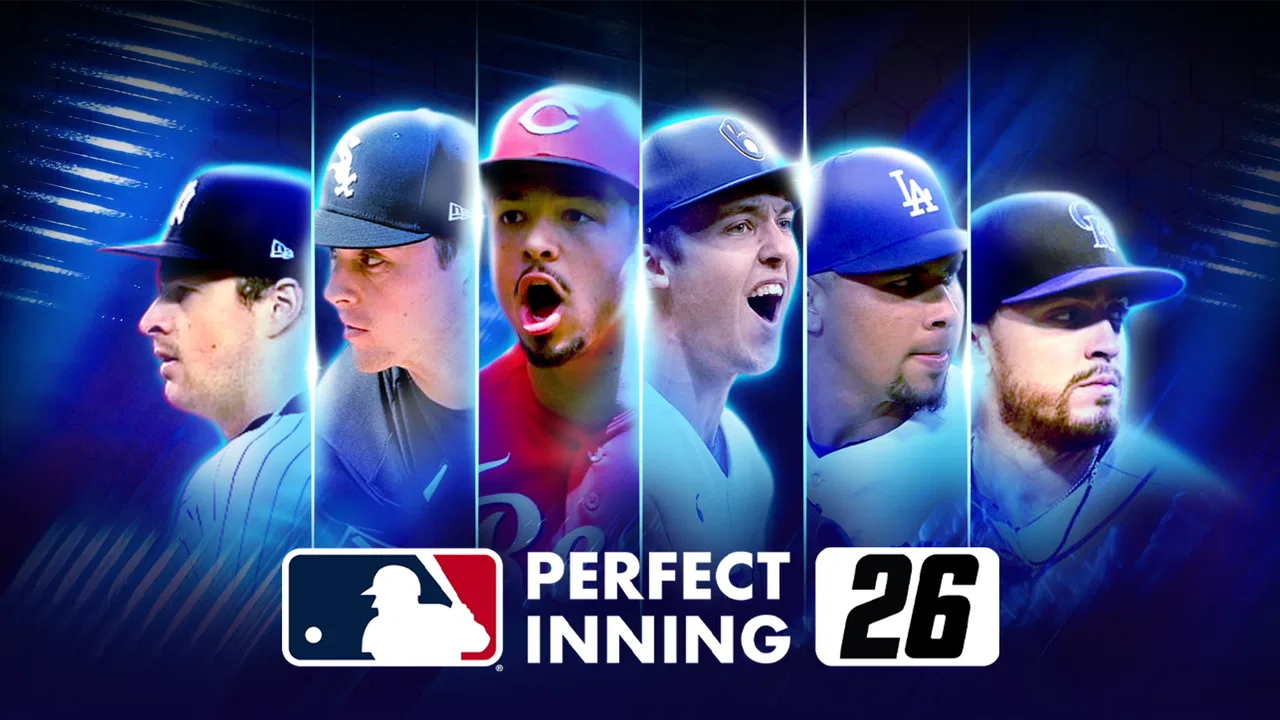
MLB Perfect Inning 26
- 3.9
- Rating
- 1.00M
- Installs
- Free
- Price

 Analysis by App-foxy
I spent time with MLB Perfect Inning 26 as a baseball game that aims to make a full season feel manageable on a phone rather than turning every session into a long console-style commitment. Developed by Com2uS USA, Inc., it sits in the sports category and is free to start, which makes it easy to try before deciding whether its deeper systems suit you. My overall impression is that it is best approached as a focused baseball experience for players who enjoy repeated matches, gradual improvement, and the rhythm of checking in regularly.
The game has a 4.0 average from around 34 thousand ratings, with more than a million installs. Those figures suggest a sizeable audience, but they do not remove the need to understand what kind of player will enjoy it. This is not the right pick if you want a tiny arcade game that can be understood in a minute and finished in a few short taps. It makes more sense for someone who likes the details of baseball and is willing to learn how its presentation, controls, and progression fit together.
How MLB Perfect Inning 26 feels during ordinary play
The first thing I noticed was the importance of pace. Baseball naturally has pauses between pitches, so the game does not need to move constantly to feel active. A good session comes from reading the situation, deciding how aggressively to approach an at-bat, and staying attentive through the important moments. That gives it a different feel from faster sports games, where the main challenge is often reacting continuously.
You May Also Like

 Google Keep - Notes and lists
Google Keep’s Quiet Growth Shows the Appeal of Simpler Notes
As mobile work gets busier, Google Keep keeps winning a simple contest: capture a thought quickly, find it later, and get on with the day.

 Blood Strike: 2.5 Anniversary
Blood Strike’s Loadouts Turn Every Drop Into a Tactical Gamble
A close look at Blood Strike’s custom loadouts: how fast access to signature weapons reshapes its battle royale rhythm, rewards preparation, and narrows the gap between fights.

 Pandora - Music & Podcasts
Pandora’s Music Is Easy to Start, but Harder to Recover
Pandora’s strength is its low-effort path from a seed to a station. Its weak spot is how much confidence it asks you to place in connection, setup, and quiet recovery.

 8 Ball Pool
 Is Built on Rivalries, Rematches, and Routine
A close look at the rivalries, rematches, shared routines, and unanswered safety questions that turn a quick pool match into a persistent mobile community.

 Samsung Music
’s Quiet Strength Is Playing What You Already Own
Its reach comes less from spectacle than from dependable access to a personal library. That simplicity is both the app’s strongest retention engine and its ceiling.

 AccuWeather: Weather Radar
AccuWeather Review: A Quick, Clear Forecast for Everyday Decisions
For everyday plans, the best forecast is the one you can understand quickly. AccuWeather makes rain timing, radar, and local conditions easy to act on, with a few trade-offs.
More From Our News Desk



For a quick break, I would play a small portion of a game rather than promise myself a complete long session. That works well when I am waiting for an appointment or taking a short lunch break, because baseball gives me natural stopping points. The trade-off is that a match can feel less satisfying if I am repeatedly interrupted. Players who want instant rounds with a clear beginning and end may prefer a simpler arcade baseball title.
The most useful way to judge its speed is not by how quickly the screen changes, but by how much attention each pitch deserves. If I rush through decisions, the game feels less rewarding. When I slow down enough to follow the count and the situation, the deliberate rhythm becomes one of its strengths. That makes the experience more suitable for thoughtful play than for mindless tapping.
New players should give themselves time to become comfortable with the presentation before making a decision about the game. A first session can feel busier than expected because there is more to absorb than the basic act of hitting or pitching. I found it better to concentrate on one part of the experience at a time instead of trying to understand every option immediately.
Why baseball knowledge helps more than fast fingers
Someone who already follows baseball will probably settle in faster. Understanding why a count matters, why a runner changes the pressure of a play, or why a pitcher might avoid a particular approach gives each decision more meaning. You do not need to be an expert, but familiarity with the sport makes the learning curve feel less abstract.
That also creates a useful everyday scenario. If I have only a few minutes, I can focus on a narrow objective rather than treating the session as a complete baseball day. I might play while commuting as a passenger, stop after a meaningful sequence, and return later when I have more time. The game benefits from that flexible habit, provided I am comfortable with progress being spread across several visits.
Players who dislike repeated sports sessions should think carefully before installing it. The appeal depends on returning to the same core activity and becoming more comfortable with it. If your ideal mobile game constantly introduces a completely new challenge, this may feel too familiar over time.
What happens when a session becomes demanding
Heavy-use moments are likely to come when I play for longer stretches, move through several matches in one sitting, or spend more time navigating the game than expected. Those are the situations where any mobile sports title can feel more demanding than a brief test run. I would not judge the experience solely from the first few minutes, because short sessions do not reveal how comfortable the game remains after extended use.
My practical advice is to begin with a moderate session and pay attention to how your device feels rather than assuming every phone will behave the same way. Screen brightness, background activity, network conditions, and the age of the handset can all affect the experience. Since the game requires Android 7.0 or later, it is accessible to a broad range of Android devices, but compatibility alone does not guarantee identical smoothness on every model.
The game is more convincing when I treat it as a sports routine instead of a single burst of entertainment. A longer visit can be enjoyable when I am in the mood to concentrate, but it is not always the most efficient use of a short break. I would keep the game available for regular play and avoid expecting every session to deliver the same level of excitement.
Another trade-off appears in the free-to-play structure. The download costs nothing, but individual in-app purchases range from $0.99 to $249.99. That wide range is important for anyone who manages a budget carefully. I would start without spending, learn how the normal progression feels, and decide later whether optional purchases genuinely improve my experience. This approach also helps separate enjoyment of the baseball itself from the temptation to accelerate progress.
Stability, recovery, and returning after an interruption
Reliability matters more in a sports game than many people expect. If a player is interrupted during a match, loses connection, or simply has to close the app, the return experience affects whether the game becomes part of a daily routine. I found it sensible to treat each session as something that may need to be paused naturally, rather than starting a long commitment when I know I may be called away.
Recovery is especially relevant on a phone shared with other activities. A device may receive messages, switch between apps, or reduce background activity to preserve battery. I would avoid assuming that every interruption will feel identical, and I would make sure important progress has had time to settle before closing the game. That is a general mobile habit, but it is particularly valuable here because baseball sessions can be longer than a single quick puzzle.
When the game behaves as expected, its structured rhythm makes returning straightforward: I can pick up the baseball routine again without needing to relearn a completely different format every time. The downside is that a player who wants a guaranteed instant restart after every interruption may find the experience less convenient than a very lightweight arcade game.
I also recommend keeping the application updated. The current version is 1.3.4, and using the current release is the most sensible starting point for judging how it runs today. Updates can matter for compatibility and general upkeep, even though they do not turn an older phone into a newer one.
Device limits and what to check before installing
The minimum Android requirement is 7.0, so owners of very old devices should check their operating system before planning around the game. That requirement is not especially restrictive for many users, but a phone that technically qualifies may still have limited storage, memory, or thermal headroom. I would leave room for the game and its updates rather than installing it on a device already close to its limits.
Resource demands are difficult to judge from a single specification because phones differ widely. A newer mid-range or high-end handset should be a more comfortable home for a visually involved sports game than an aging entry-level model. On a weaker device, I would be more cautious about long sessions, especially if the phone already becomes warm while running other games.
There is also a difference between playing at home and playing on mobile data. A stable connection is generally preferable for an online-focused sports routine, while a crowded network or weak signal can make any interruption more frustrating. I would test it on the connection I actually plan to use instead of assuming that a good home Wi-Fi experience will automatically carry over to every location.
Battery expectations should be realistic. A game that keeps me engaged through repeated matches may use more power than a turn-based title that spends most of its time on static screens. I would avoid starting a long session with a nearly empty battery, particularly if I am away from a charger. That is not a criticism unique to this title; it is simply part of choosing a baseball game with more sustained on-screen activity over a very light alternative.
Where it stands beside other mobile sports games
Compared with a simple baseball arcade game, MLB Perfect Inning 26 offers a more serious reason to return. The baseball setting and season-oriented identity give the experience a stronger sense of continuity than a title built only around quick home-run challenges. In exchange, it asks for more patience and makes the learning process feel more important.
Compared with a console or dedicated handheld baseball game, the phone format is its main advantage. I can keep it available for short visits and do not need separate hardware. The compromise is that a mobile game must balance depth with touch-screen convenience, progression, and optional purchases. Players seeking the most complete simulation possible may still prefer a larger platform, while players who value accessibility may find the phone version easier to live with.
It also differs from casual sports games that reduce baseball to one repeated gesture. Those games can be better when I want immediate action with almost no explanation. This one is a better match when I want the sport to retain some of its decision-making and seasonal character. The right choice depends less on which game is objectively superior and more on whether you want baseball as a quick reflex activity or as a repeatable hobby.
Who should play, and who should skip it
I would recommend it to baseball fans who enjoy building familiarity through repetition, players looking for a free sports game to test without an upfront purchase, and people who like sessions that can be divided across the day. It is also a reasonable choice for someone moving from casual baseball games toward a more involved mobile experience without immediately buying a console title.
I would skip it if you have little patience for learning a sports game, dislike recurring progression, or want every session to be completely self-contained. I would also be cautious if your phone is old, frequently short on storage, or already struggles with demanding games. The minimum operating-system requirement is only one part of the decision; the practical condition of the device matters just as much.
Parents should note that the content rating is Everyone, which makes the game broadly suitable from an age-rating perspective. That does not mean every family will want optional purchases enabled without supervision. Because the purchase range goes as high as $249.99 for an individual item, I would use the device's purchase controls if children may play unsupervised.
Small habits that make the experience better
My first tip is to avoid spending immediately. Play enough to learn whether the match rhythm, presentation, and repeat structure genuinely hold your attention. A free starting point is valuable here because the biggest question is not whether the game can be downloaded, but whether its long-term baseball routine fits your taste.
Second, use short sessions to learn and longer sessions only when you have a stable connection and enough battery. This reduces the frustration of being interrupted at an inconvenient moment and gives you a clearer sense of how the game behaves under heavier use. It also prevents a demanding sports game from taking over a break that was meant to be brief.
Third, compare your enjoyment of decision-making with your enjoyment of progression. If you mainly like the actual baseball moments, you may be happy to play at your own pace. If your interest depends on rapid improvement, optional purchases may become more tempting, and that is where setting a personal spending limit before playing becomes useful.
Finally, do not judge the title only by whether it feels instantly simple. Its value is tied to returning, noticing situations more clearly, and developing a comfortable routine. That is a strength for patient players but a weakness for anyone who wants a game that explains itself and delivers its full appeal in one sitting.
My performance verdict
After weighing speed, longer-session demands, reliability, and device limits, I see MLB Perfect Inning 26 as a focused mobile baseball game rather than a universally convenient sports app. Its deliberate pace can feel satisfying when I am ready to pay attention, and its free entry makes experimentation easy. The broad Android support is helpful, but I would still choose a reasonably capable device and a dependable connection for the best experience.
There is friction: longer play needs more planning, interruptions can matter, and the range of in-app purchases calls for self-control. Those points do not cancel out the appeal, but they do define it. This is not the game I would hand to a friend who wants instant arcade action. I would recommend it to the friend who follows baseball, enjoys returning to a familiar sports routine, and wants a substantial phone-based option without paying at the door.
My final recommendation is to install it free, test it across both a short break and a longer uninterrupted session, and then decide whether its pace feels rewarding on your own device. If it does, the game can become a dependable baseball companion. If you want faster matches, lighter hardware demands, or less attention to progression and purchases, a simpler mobile sports alternative will probably serve you better.
FAQs for MLB Perfect Inning 26
01What are the system requirements for MLB Perfect Inning 26?
MLB Perfect Inning 26 requires Android 6.0 or iOS 11.0 and above to run smoothly. Ensure you have at least 2GB of RAM and around 1.5GB of free storage space. A stable internet connection is also necessary for real-time gameplay and updates. Always check for the latest version for optimal performance.
02Is MLB Perfect Inning 26 free to play?
Yes, MLB Perfect Inning 26 is free to download and play. However, it includes in-app purchases that can enhance your gaming experience by offering premium features, player packs, and upgrades. These purchases are optional, and the game can be enjoyed without spending money.
03Can I play MLB Perfect Inning 26 offline?
No, MLB Perfect Inning 26 requires an active internet connection to play. This is essential for accessing real-time features, online competitions, and updates. Offline play is not supported, so ensure you have a reliable internet connection to fully enjoy the game’s features.
04How does the game ensure fair play and prevent cheating?
MLB Perfect Inning 26 utilizes advanced anti-cheat systems and regular monitoring to ensure fair play. The developers are committed to maintaining a level playing field, with updates to tackle new cheating methods. Players caught cheating may face account suspensions or bans.
05What modes and features does MLB Perfect Inning 26 offer?
MLB Perfect Inning 26 offers a variety of modes, including Season Mode, PvP, and Live Battle. You can manage your team, participate in real-time competitions, and experience authentic MLB gameplay. The game also features realistic graphics, player stats, and regularly updated rosters for an immersive experience.
Pros
- Stunning graphics enhance gameplay experience.
- Realistic baseball simulation mechanics.
- Extensive player customization options.
- Regular updates with new features.
- Engaging live events and challenges.
Cons
- In-app purchases can be expensive.
- Requires a stable internet connection.
- Occasional lag during matches.
- Complex controls for new players.
- Limited offline gameplay options.

MLB Perfect Inning 26
Gallery